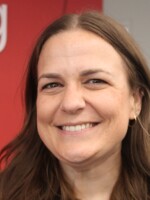
A pair of nurses invented a program that helps doctors plan ahead to safely operate on patients with medical implants. The program, DeviceWise, has reduced surgery cancellation rates from 12% to 2% at OSF HealthCare's Saint Francis Medical Center in Peoria.
It will be implemented at OSF St. Joseph Medical Center in Bloomington later this fall.
DeviceWise, created with support from OSF's Innovation Studio, has been in development for more than eight years. It organizes and presents instructions about the many types of medical implants on the market, so patients and their devices can be protected during surgery.
Unanticipated medical implants in patients can cause last-minute complications and, sometimes, a surgery must be canceled at the last minute.
More than pacemakers
Mary Marvin is a retired OSF nurse, and one of two co-founders of OpenSurg that produces DeviceWise. She remembered the day this issue was brought to her attention.
There was a patient who had been wheeled back to the operating room for surgery, Marvin said. Not only did the patient have an unexpected medical implant — he had two. Unfortunately, Marvin said, the surgical team was not prepared to manage the implants, and the patient's surgery had to be canceled.
Marvin recalled being told, "We have to figure out a way to get this identified earlier, so that we're not surprised back in the operating room."
"We have like 30 different categories of devices now," said Jim Weldy, CEO of OpenSurg. His background is in medical physics, and he has been building medical technology startups for almost 30 years. This is his 10th startup.
"It used to be primarily pacemakers that we would need to mitigate risks for, in surgery and other procedures," Weldy said. "But now, especially in the last 5-10 years, there's been just an explosion in the variety of things. And I'm so thankful for that.
"We're doing a lot of great work out there with innovation, but the downside is that — whoa, it is a lot to stay on top of."
In addition to pacemakers, Marvin said other common medical implants include deep brain stimulators that treat Parkinson's disease, spinal cord stimulators that treat pain and diaphragmatic pacers that help people breathe.
Surgery centers see people of all ages with medical implants, even children, said Jill Teubel, a nurse at OSF, and the other co-founder of OpenSurg.
"Cochlear implants, that's a common one for children that have hearing issues at birth," said Teubel. "Usually those children can only get one for each ear because they are very, very, expensive. So, keeping those devices safe is ultra important for those little ones."
She said diabetes management is another instance where children may have a medical implant.
A little information and planning goes a long way, said Teubel.
"Some devices, you need to tell the patient to bring a tool to turn it off for the day of surgery," she said. "So if we have a patient living three hours away, and they aren't told that — you can only imagine how frustrated a patient would be if they got there and they could not have their surgery."
A sense of comfort
Weldy said his advanced planning is how OSF has drastically reduced its surgical rescheduling rate at the Peoria hospital.
After hitting the market in 2025, DeviceWise is in the process of being adopted by several hospitals in the Midwest and throughout the country, including OSF St. Joseph in Bloomington this fall. The goal is to go nationwide.
"There's about 4.2 million [Americans] that are walking around with these devices," said Teubel. "There's about 50-60 million cases of surgery in the United States yearly. And it's about 6-7% of those cases [which] are the ones on our device table."
Annette Woodward, of Washington, has directly benefited from DeviceWise. Her daughter Jessica, now 44, was 10 years old when she had surgery to remove a tumor from her brain stem, said Woodward, which resulted in multiple disabilities. Her vision and hearing also were impacted. Her parents have been her full-time caretakers since then.
Woodward said Jessica uses medical devices to help her with daily living, including eating. Jessica uses a diaphragmatic pacer to help her breathe. This keeps her off of a ventilator while she sleeps. When she has surgery, anything electromagnetic can damage her device and stop her breathing, explained Woodward.
"Any time Jessica goes into surgery, it's a complicated situation," she said. "So yeah, this program is a great thing to have."
"Our life has been really turned upside down," said Woodward. "Having somebody with disabilities like Jessica has, sometimes it really gets hard. And knowing that there is a program out there that can keep her safe when she does have things that need to be done surgically, is really comforting."
That sense of comfort is exactly what motivated Marvin, Teubel and Weldy to create this software.
"This is how we sleep well at night," said Weldy. "We take good care of patients; we take good care of our customers; and do good business, sleep well and pray for the opportunity to do the same thing tomorrow."