

Tom Chouteau grew up just four blocks from The Putnam Museum and Science Center (1717 W. 12th St., Davenport), and he’s achieved a lifelong dream by creating a dazzling, dreamlike world of color, light, and unending reflection with Kaleidoscope Odyssey, a mind-bending new exhibit on view through Sept. 7, 2026.
Featuring more than 24 large‑scale, immersive kaleidoscopes (as well as a few smaller ones) created by the world‑renowned, fun-loving artist, Kaleidoscope Odyssey celebrates the intersection of visual art, science, and optics. Chouteau’s work has been featured in exhibitions from Japan to New York, as well as Davenport’s German American Heritage Center and Museum, and now returns home in an experience designed to captivate visitors of all ages.

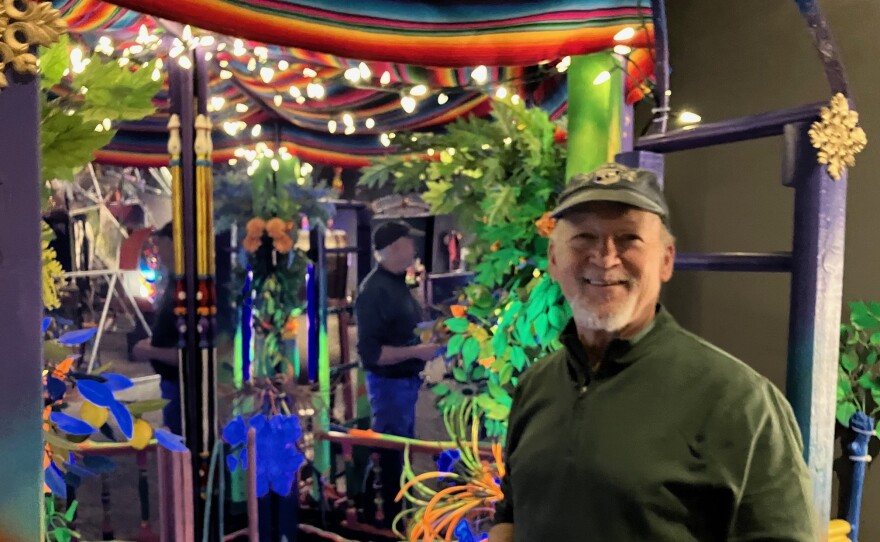
Now 70, the Davenport West alum is one of eight kids (and only son) of a St. Ambrose University art professor. Chouteau went on to graduate from SAU, and he’s collaborated on many of his pieces with his own son Matt.
“Originally, I was interested in silk screening and printing, like etching and intaglio, that kind of thing. But then sign making,” Chouteau said Tuesday, March 31, noting he worked as a graphic artist at the Davenport Public Library for 20 years, until 2003.
He then worked 21 years as a driver for the Twilight Riverboat in LeClaire. Chouteau has been making kaleidoscope-inspired art for over 35 years, and had his own art shop for four and a half years in the Village of East Davenport until spring 2025. All his pieces were in storage until being unveiled at the Putnam, in the rotating exhibit space off the Quad City Innovators gallery.

Chouteau started making large sculptural ones because he wanted children to be able to play with them.
“Climb on them or do whatever they need to do without the parents constantly badgering them, telling them, stay away, don't touch,” he said. “So that was basically. I wanted to open it up so that children could enjoy them.”
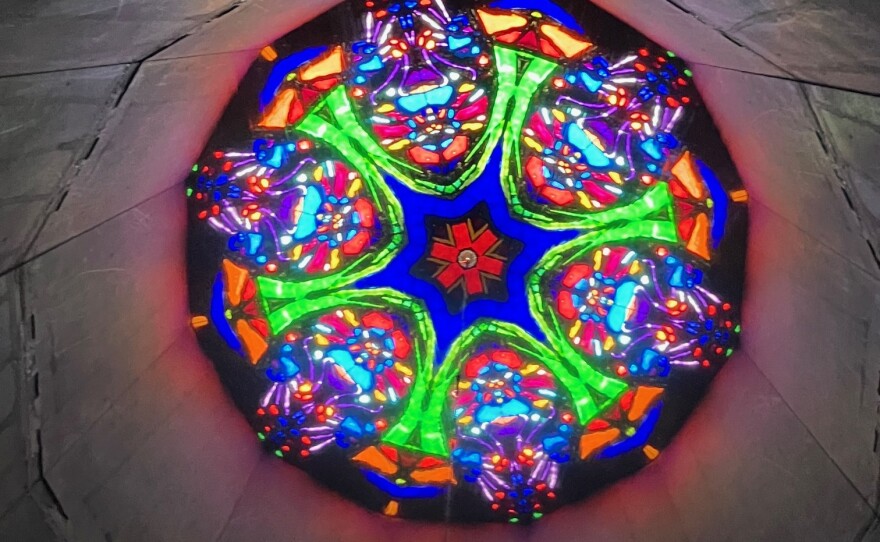
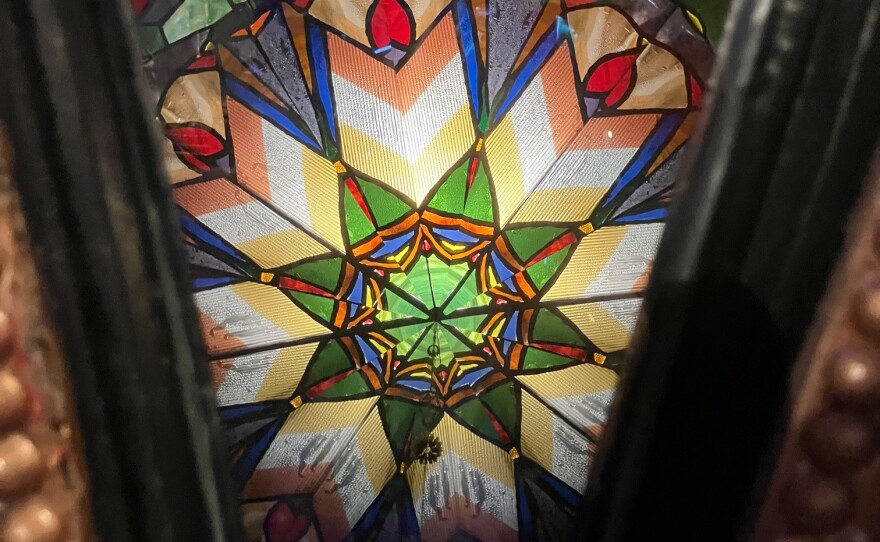
(See a sample of some Kaleidoscope images in the gallery below.)
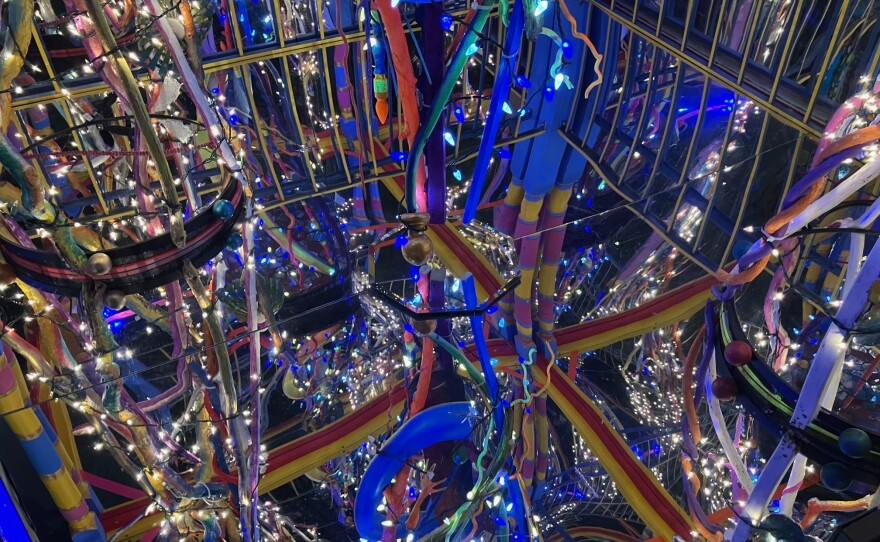

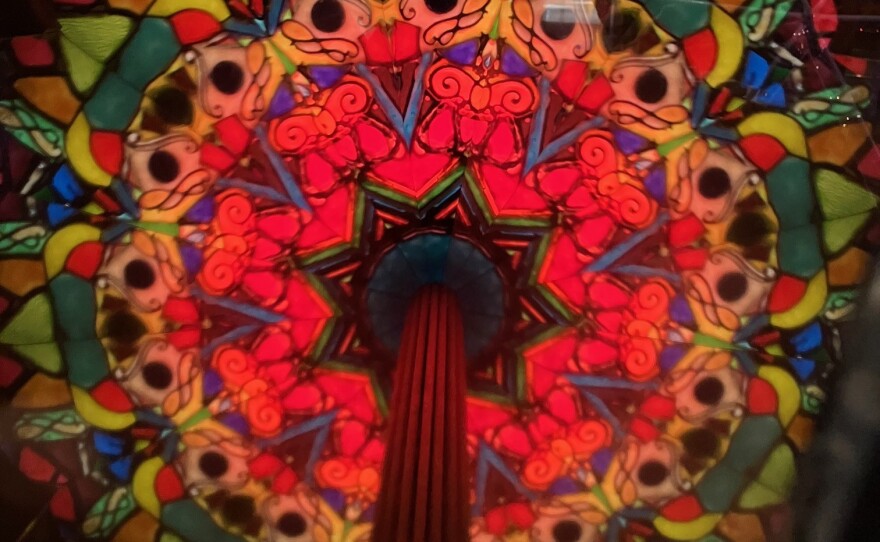
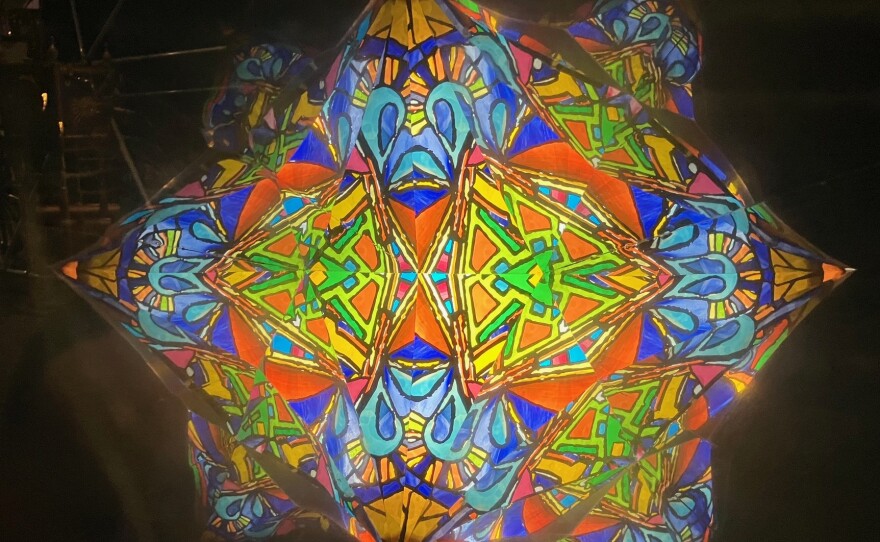

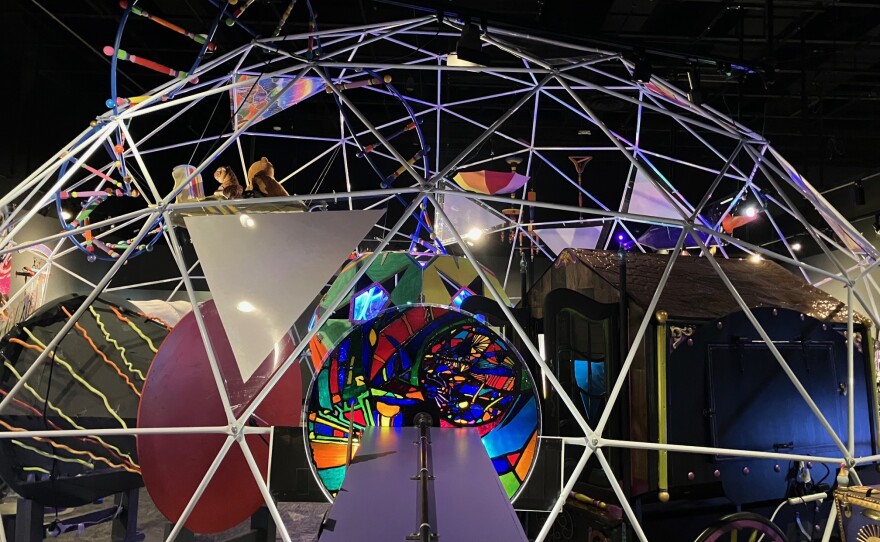


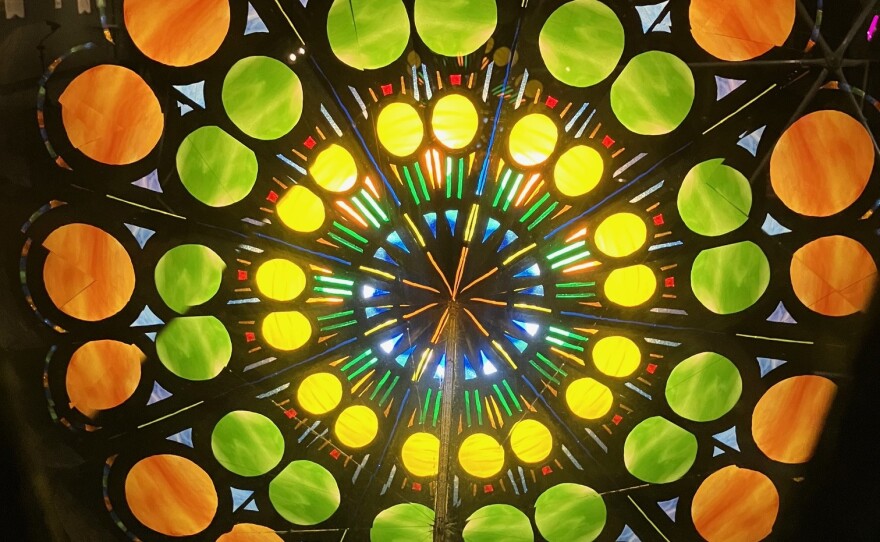

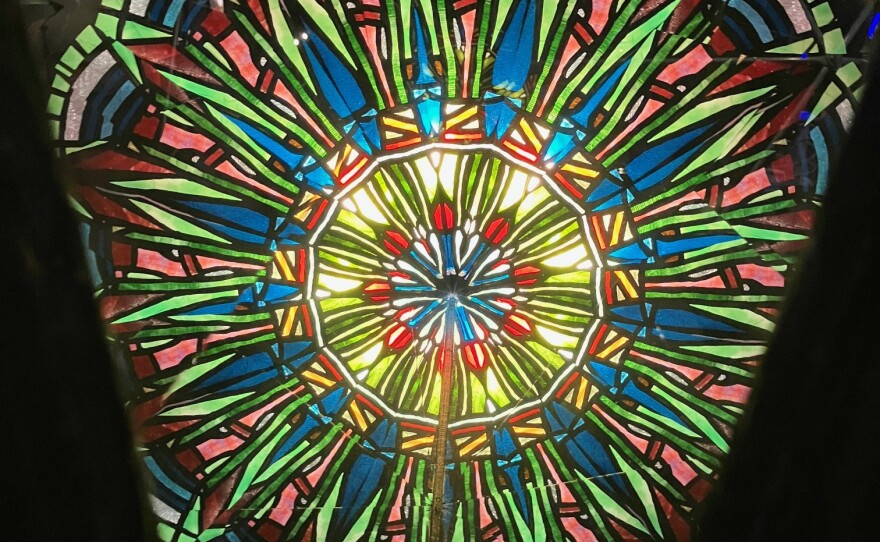
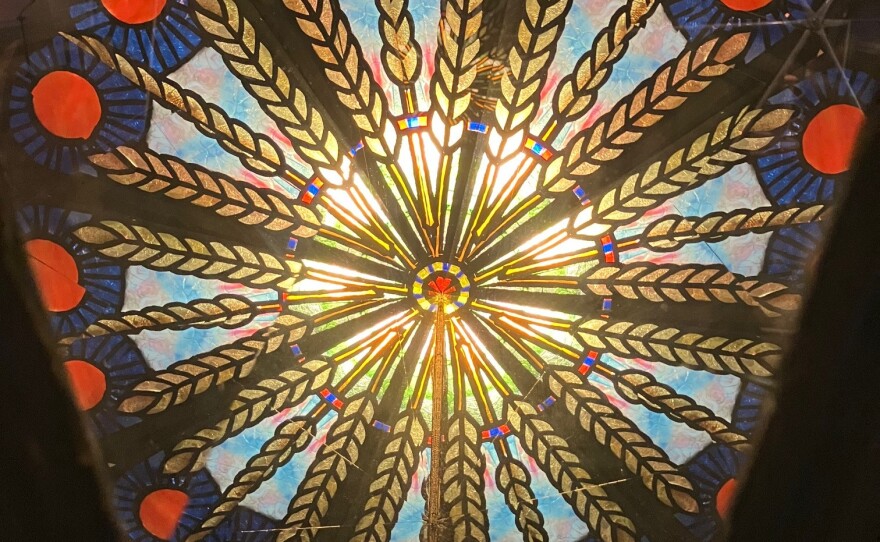


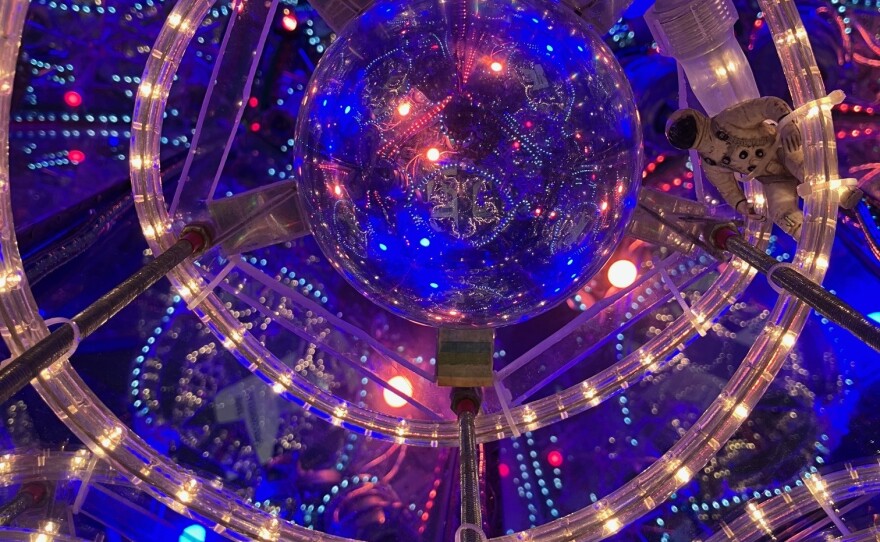


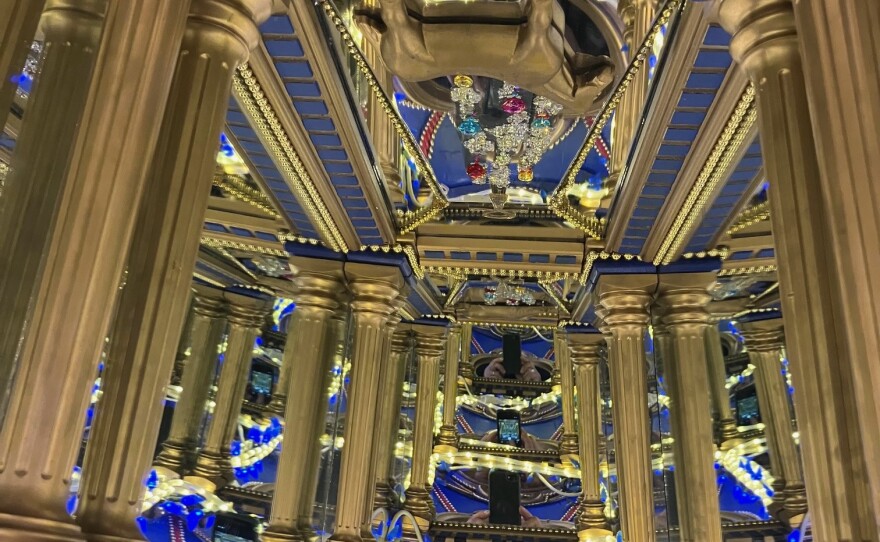
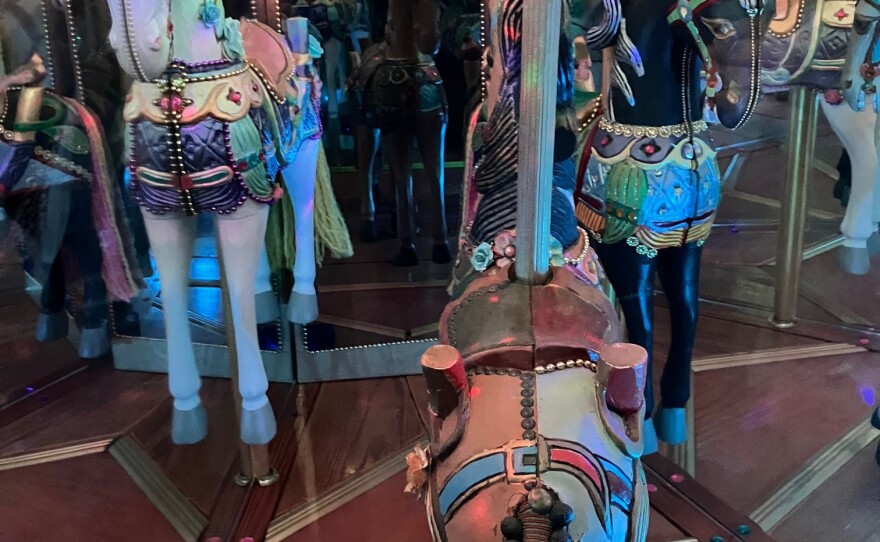


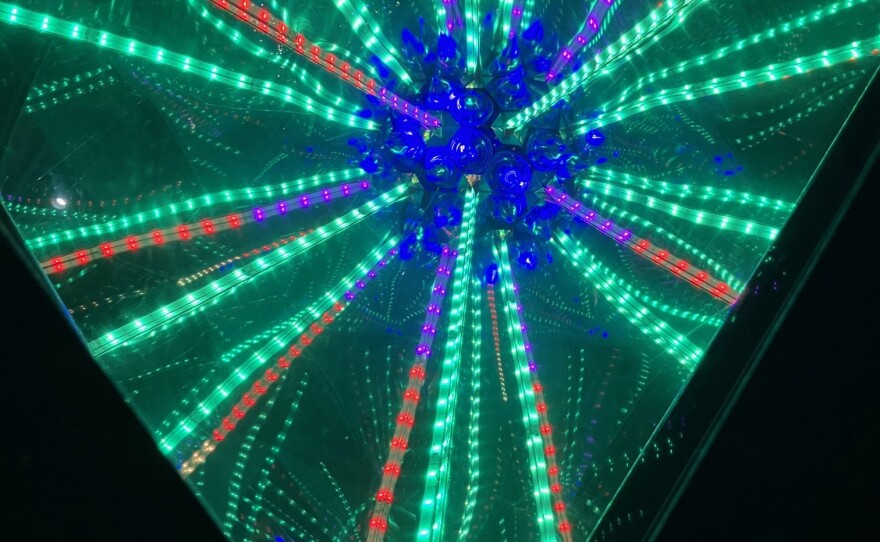
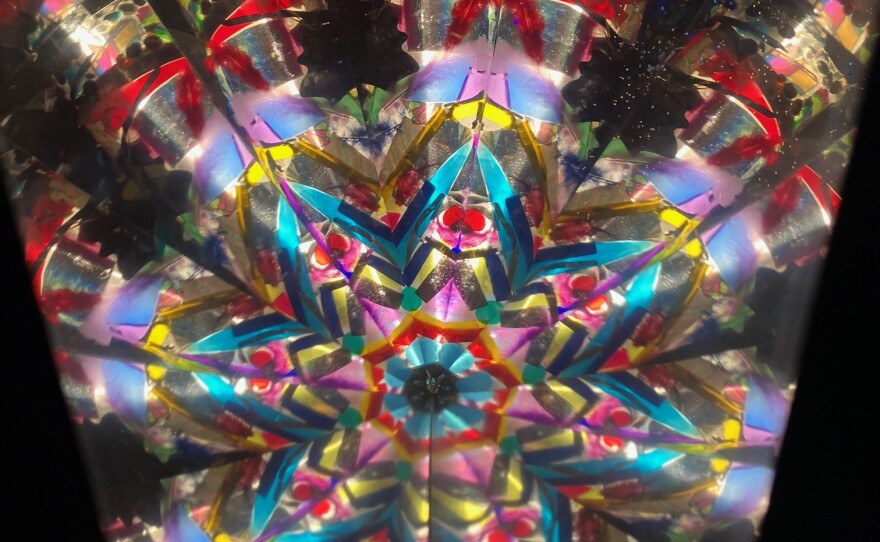
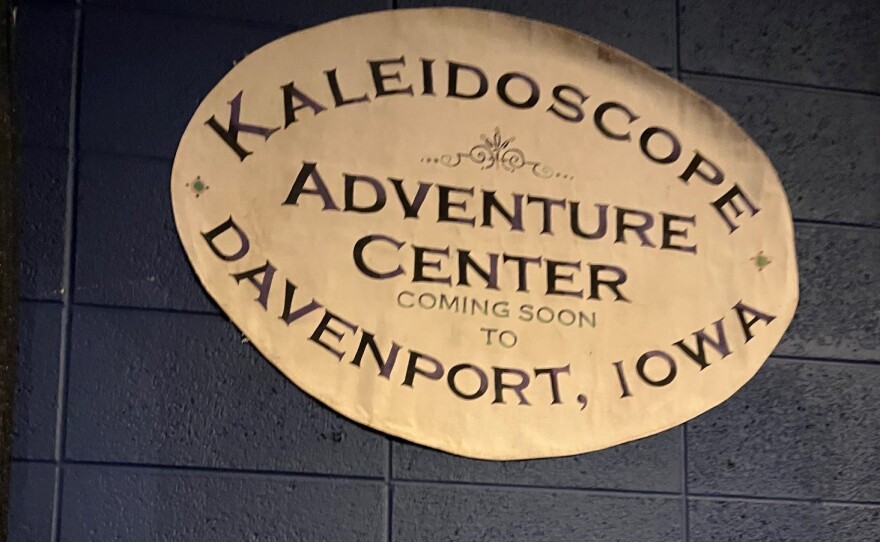
Chouteau is a member of the Brewster Kaleidoscope Society for kaleidoscope aficionados and artists, named for the device’s inventor, David Brewster (1781-1868), and is looking for a suitable commercial space to have his pieces on permanent display.
There’s a construction company site next to German American Heritage Center (where Chouteau showed his kaleidoscopes about 11 years ago), in Davenport, that he said would be ideal. He’s attended many Brewster Society national conventions.
"I had the pleasure of working with Tom previously and knew that this culmination of his work would be incredible for our guests," Kelly Lao, the Putnam Vice President of Museum Experiences (and former GAHC executive director) said Tuesday.
"He's a top-notch Iowa artist, often receiving support for his work through the Iowa Arts Council and Quad City Arts' Arts Dollars," she said. "The best part of working with Tom is that he's here, nearly daily, showing guests how his kaleidoscopes work and inspiring people to connect art and science through his incredible mirrored environments."
He has displayed 17 of his works at the popular Emerson Resort in New York’s Catskill Mountains (where there still is one on view), which has the world’s largest kaleidoscope (made by another artist), inside a 60-foot-tall silo. It transforms moving images into mesmerizing displays of color, shape, and light – with mirrors 37½ feet long, weighing 5,000 pounds, built on-site and installed using a 100-foot crane.
“I have done a walk-through kaleidoscope that was pretty impressive,” Chouteau said of one for the 2001 Symphony in Bloom at QCCA Expo Center, Rock Island (not part of this exhibit). “It was 24 feet long, you had ramps to get in. It had a front porch and a back porch and music, a big 5-foot-tall cylinder on the roof of the porch.”

He said his biggest satisfaction is to create something he’s never done before.
“Try something new, like that one over there in the corner. Last summer and the summer before, I took photos while driving for the riverboat,” he said of a flower-themed one. “Whenever I'd see a really interesting garden or just a pot of flowers, I'd take pictures of it. So I made adhesive transparencies out of the photos with a printer and cut them out and made that color wheel. So that's made out of primarily flowers that I took pictures of.”
“Sometimes I come up with something very new and different, and other times I surprise myself,” Chouteau said. “And I had no idea it was gonna look like that. When it was all done, it was like, oh, yeah, now I get it. I’m learning and experimenting. So I'm kind of like a mad scientist.”
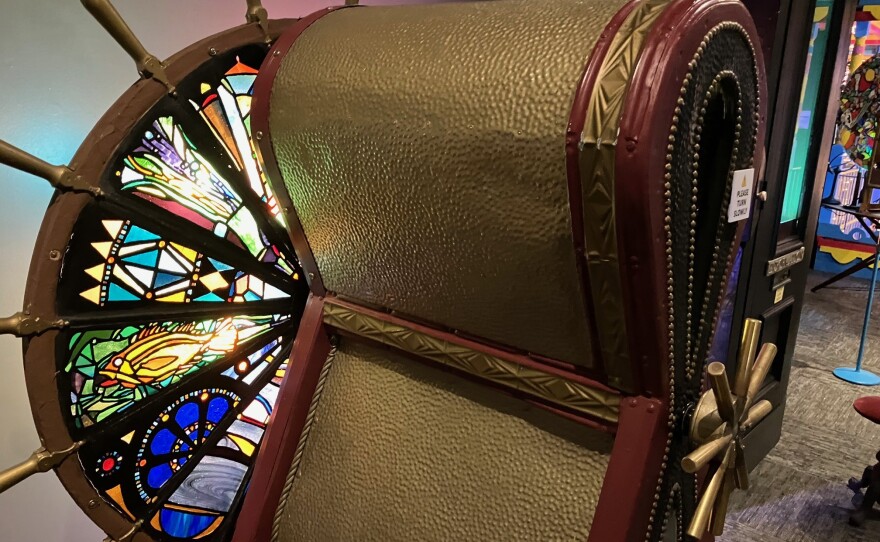
For his Pilot Wheel, which visitors can turn to create different images, he likes giving up control.

“For some of these, I dictated what you're gonna look at to a degree,” Chouteau said, noting for the Pilot Wheel, there are 16 triangular segments that create a big round stained-glass window (with the help of mirrors), like a mandala.
“But if you go between the two of them, this one and the next one, it's random. I mean, I didn't plan it that way,” he said. “Where you have a spoke in between and you have half of one and half of the other, it becomes something that I didn't intend.”
Interacting with pieces
Other kaleidoscopes can turn at the push of a button, and others visitors can put their whole head inside and see multiple reflections through its mirrors.

“And what's really fun about kaleidoscopes, I found something like that, but where you can see yourself and it takes all your wrinkles out,” Chouteau said of one of the pieces. “I've had women come up to me and say, I've never looked so good because of all their wrinkles are out.”
One carousel piece uses carved wooden horses, and Chouteau split them in half and affixed them to mirrors, so they look like whole horses, and multiplied with all the reflections.

One kaleidoscope displayed was an award winner for him at the Strathmore Mansion in Maryland. Another one is popular among kids where you can reach in and move and play with colored jewels, and two children can interact with it at a time, Chouteau said.
For one exhibit in Newport News, Va., he showed 14 pieces for just one day. Chouteau also had an exhibit a year ago at the Quad City Arts gallery in downtown Rock Island.

He is in residency at the Putnam during the exhibit (a first for the museum), with a workshop off the main room where he’s working on new pieces and he will hold workshops and demonstrations for the public.
There’s a dollhouse in the exhibit, with mirrors, and has rooms with upside-down furnishings and figures, and steps, with the mirror below it makes them appear right side up.

“Why not have some fun with it?” Chouteau said. “I’ve done some things most people would never get around to doing. That’s the quirk of it – going ahead and playing.”
Near the exhibit entrance (where you can learn about Choteau and Brewster), there are displays of historic kaleidoscopes, made by others including some collected by Karl Schilling of Manly, Iowa.
Ever-changing designs
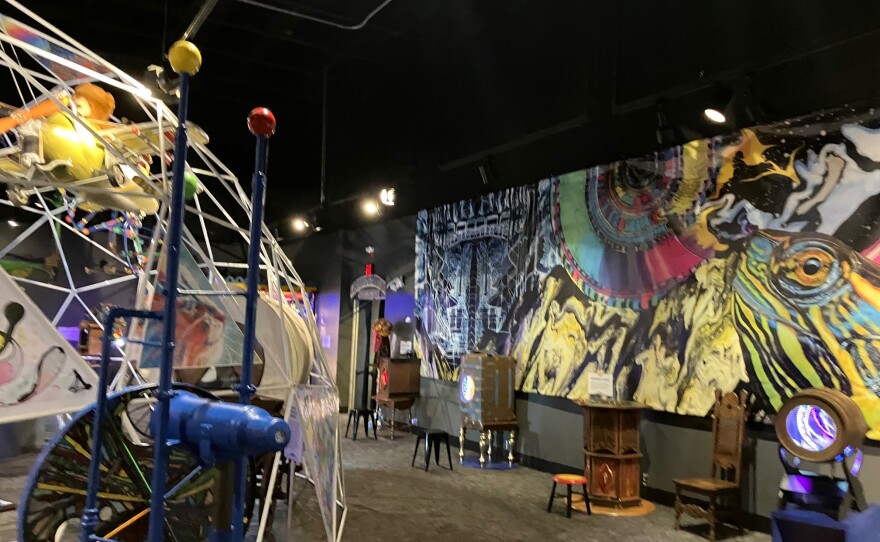
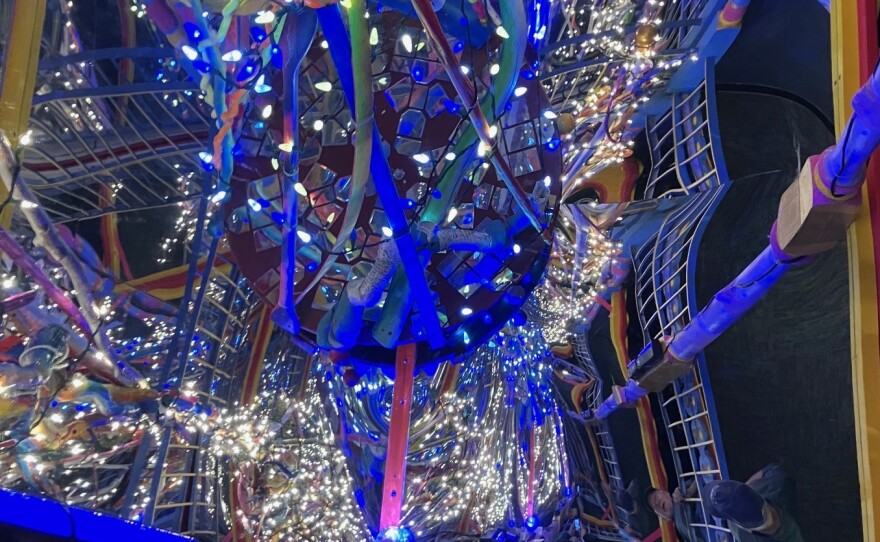
The Putnam exhibit surrounds guests with towering kaleidoscopes filled with intricate patterns, flowers, stained glass, textures, and light—often weaving viewers’ own reflections into ever‑changing designs. Through hands‑on exploration, visitors discover how mirrors, symmetry, and light work together to create mesmerizing visual effects, according to a Putnam release.

As the artist-in-residence, Putnam guests will be able to watch him work in real time, ask questions, and learn firsthand about his creative process and the stories behind each piece. This evolving, behind‑the‑scenes approach transforms Kaleidoscope Odyssey into a living exhibit, one that grows and changes alongside the artist.
“This exhibit is truly a work in process, and the process is my favorite part of making art,” Chouteau said. “When I start a piece, I don’t always know where it’s going to end up. I follow my passion and intuition and let it guide me, and in many ways, each kaleidoscope creates itself. I bring together objects you’d never expect to see side by side, things that seem unrelated, but somehow, they find each other and belong. Every piece feels like a friend to me, completely different and completely unique. The whole experience is whimsical, almost like stepping into an Alice‑in‑Wonderland world—curious, playful, and full of discovery.”
In addition to immersive visual experiences, the exhibit includes opportunities to explore the history, science, and optics of kaleidoscopes, alongside historical specimens that offer deeper context for those who want to dive further into the subject.

“What’s been especially exciting about Kaleidoscope Odyssey is how it lives at the intersection of visual art and science,” said Matt Pulford, the Putnam’s exhibit development manager.
“Because the exhibit is paired with an artist‑in‑residence, the process has been incredibly fluid. While there is traditional exhibit content exploring the history, science, and optics of kaleidoscopes, much of the experience is hands‑on and driven by free exploration," Pulford said.
Visitors will walk into a visual explosion of color and light, experiment, play, and then dive deeper into history and view historical specimens. It feels truly different; unlike anything we’ve done here during my time at the Putnam.”
Kaleidoscope Odyssey (on the second floor) is included with regular museum admission. For more information, visit putnam.org.
(See more images from the exhibit in the gallery below.)









This story was produced by WVIK, Quad Cities NPR. We rely on financial support from our listeners and readers to provide coverage of the issues that matter to the Quad Cities region and beyond. As someone who values the content created by WVIK's news department, please consider making a financial contribution to support our work.
